Polyaspartic vs Polyurea Garage Floor: Which Brand Wins?
Search "polyaspartic vs polyurea garage floor" and you'll find a lot of content written like these are two competing companies duking it out for your business. They're not. Polyaspartic and polyurea are two related…
Key takeaways
10 min read- Both coatings fall under the broader polyurea chemistry umbrella, and that’s part of why the comparison confuses people.
- This is where the two chemistries diverge the most in ways that actually matter for a real project.
- Garage floors face more UV exposure than people initially expect, light pouring in through an open garage door, windows, or a door left up for hours during yard work and projects.
- The speed that makes it efficient for a crew working a large commercial floor on a tight timeline makes it genuinely difficult to manage correctly without that training and equipment.
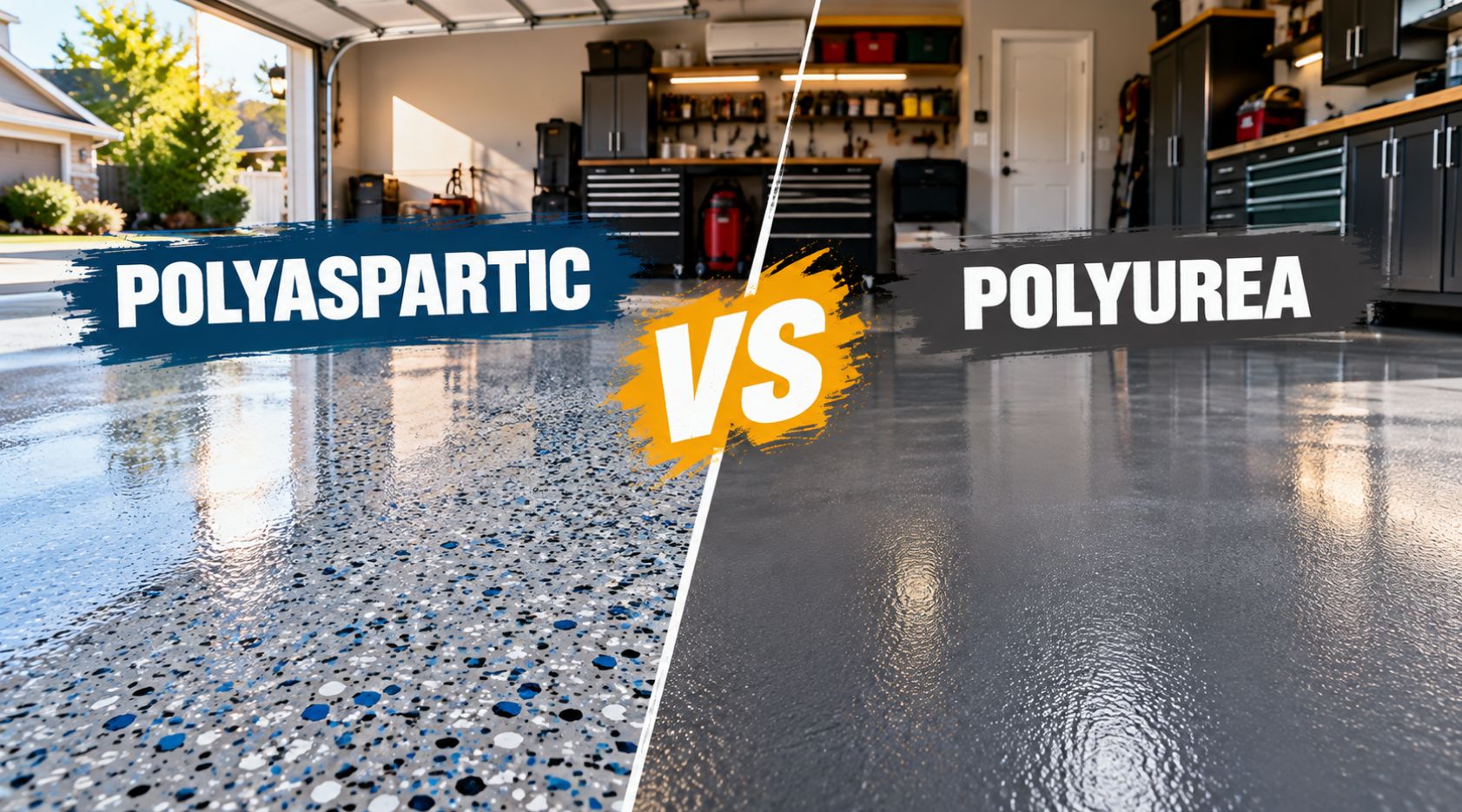
Search “polyaspartic vs polyurea garage floor” and you’ll find a lot of content written like these are two competing companies duking it out for your business. They’re not. Polyaspartic and polyurea are two related coating chemistries, close cousins in the same aliphatic and aromatic polyurea family, and the real question isn’t which one “wins” in some abstract sense. It’s which one actually fits a weekend garage floor project better, because they genuinely do perform differently once you get past the marketing language both get wrapped in.
This guide breaks down what separates polyaspartic and polyurea as garage floor coatings, where each one has a real advantage, and how to think through the choice for your own project instead of just picking whichever one a salesperson happened to mention first.
What Polyaspartic and Polyurea Actually Are
Both coatings fall under the broader polyurea chemistry umbrella, and that’s part of why the comparison confuses people. Polyurea forms through a reaction between an isocyanate component and an amine resin blend, curing extremely fast, often within seconds to a couple of minutes for the reactive mix. Polyaspartic is technically a type of aliphatic polyurea, using aspartic ester resins that react somewhat more slowly than a standard polyurea blend, which gives installers more working time while still curing dramatically faster than traditional epoxy.
That shared chemical family is exactly why a lot of garage floor marketing uses the terms almost interchangeably, and why homeowners researching options end up more confused rather than less. The practical differences that matter for a garage floor come down to cure speed, working time, UV stability, and how forgiving the material is for the person actually doing the application.
Cure Speed and Working Time
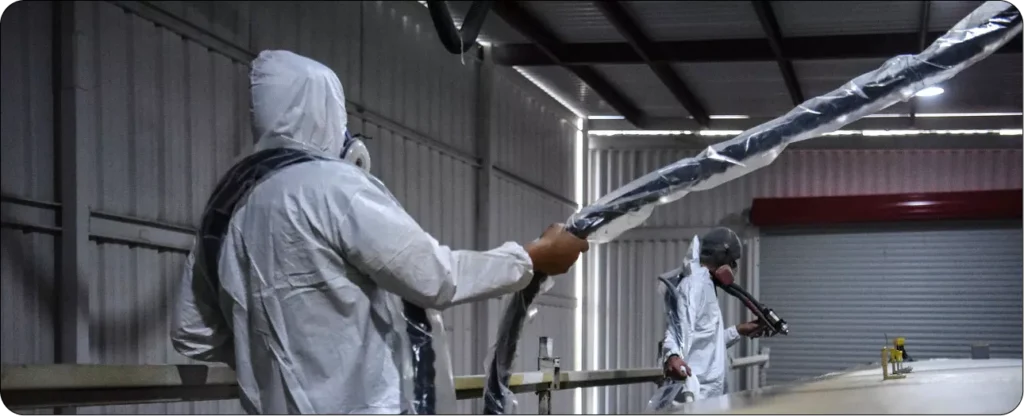
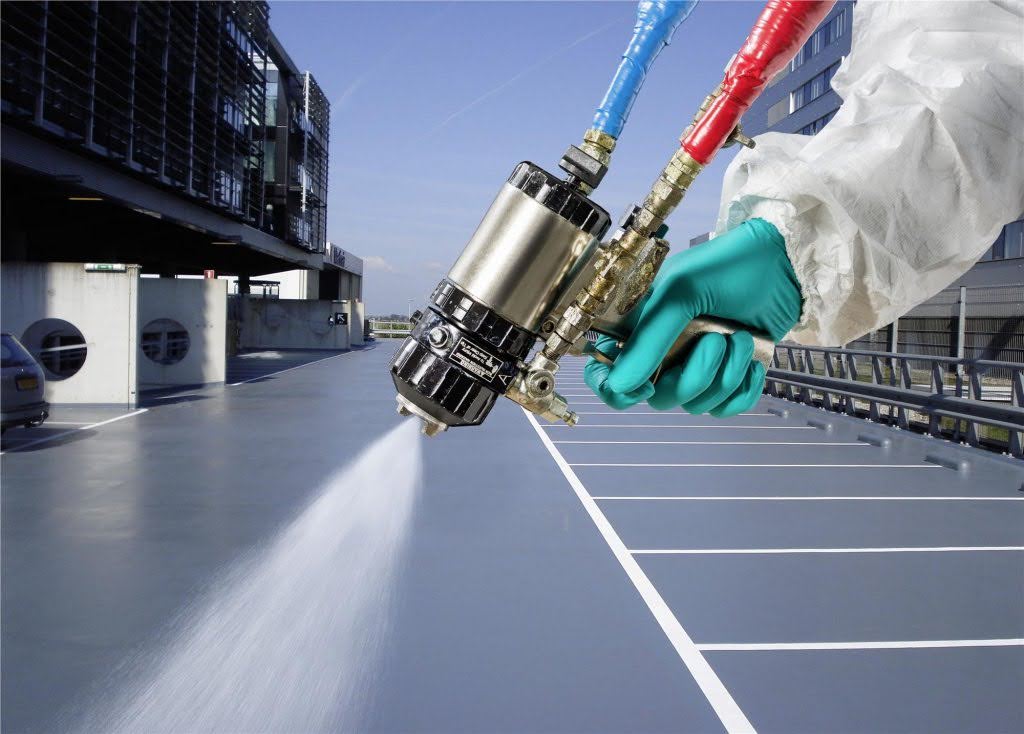
This is where the two chemistries diverge the most in ways that actually matter for a real project. Straight polyurea cures so fast, often in under a minute for the reactive components, that it typically requires specialized plural-component spray equipment and an experienced applicator who can move quickly and precisely across the floor before the material sets. That speed is a genuine advantage for a contractor running a tight commercial schedule, but it leaves almost no room for correcting a mistake mid-application.
Polyaspartic’s slower reaction gives installers meaningfully more working time, often in the range of twenty to thirty minutes depending on the specific formulation and ambient temperature, while still curing to a walkable surface in a matter of hours rather than the one to three days a traditional epoxy coating typically needs. For a garage floor project specifically, that extended working window tends to matter more than raw cure speed, since it allows for proper rolling, broadcasting of flake or chip material, and correcting any application issues before the coating sets up.
UV Stability: A Real Difference That Matters for Garages
Garage floors face more UV exposure than people initially expect, light pouring in through an open garage door, windows, or a door left up for hours during yard work and projects. This is one area where the chemistry distinction genuinely matters rather than being a marketing talking point.
Aliphatic polyaspartic formulations are inherently UV stable, resisting the yellowing and chalking that aromatic chemistries are prone to under sustained sunlight exposure. Standard aromatic polyurea, by contrast, will yellow over time with UV exposure, which is part of why it’s more commonly used as a base or intermediate coat with a UV-stable topcoat over it, rather than as the final visible surface layer in an application that’s going to see regular sunlight. A garage floor is exactly the kind of application where this distinction has real, visible consequences a few years down the road, not just a theoretical one.
Application Difficulty and Equipment Requirements
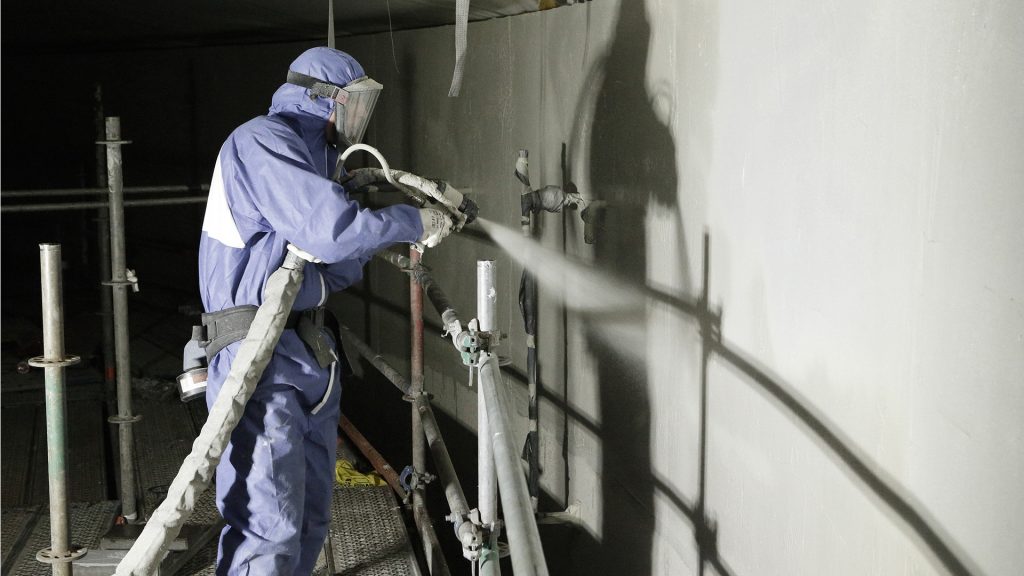
Straight polyurea’s fast cure generally demands specialized plural-component spray equipment and a trained, experienced applicator, which is a significant factor in why it’s more common in commercial and industrial settings handled by professional crews than in DIY garage floor kits. The speed that makes it efficient for a crew working a large commercial floor on a tight timeline makes it genuinely difficult to manage correctly without that training and equipment.
Polyaspartic’s extended working time makes it more approachable for roll-applied or smaller-scale applications, and it’s become a common choice for both professional garage floor installers and more experienced DIY projects precisely because that longer window gives more margin for getting the application right. This doesn’t mean polyaspartic is foolproof for a first-time DIY applicator, proper surface preparation and careful attention to mixing ratios and application timing still matter enormously, but it’s a meaningfully more forgiving material to work with than straight fast-set polyurea.
Durability and Wear Resistance
Both chemistries, properly applied over a well-prepared concrete substrate, offer strong abrasion resistance, chemical resistance to common garage substances like oil, gasoline, and automotive fluids, and good impact resistance against dropped tools and equipment. The durability difference between a well-applied polyaspartic and a well-applied polyurea garage floor coating tends to be smaller than the UV stability and application difficulty differences, since both are genuinely durable, long-wearing systems compared to a basic epoxy coating.
Where durability differences do show up tends to relate more to formulation specifics, film thickness, and whether the system includes a broadcast flake or chip layer for additional texture and wear resistance, than to the core polyaspartic-versus-polyurea chemistry distinction itself.
Polyaspartic vs Polyurea Garage Floor Comparison
| Factor | Polyaspartic | Standard Polyurea |
|---|---|---|
| Cure speed | Hours to walkable surface | Often under a minute for reactive mix |
| Working time | Roughly 20 to 30 minutes typical | Very limited, requires fast, skilled application |
| UV stability | Inherently UV stable, resists yellowing | Aromatic versions yellow with sun exposure |
| Application equipment | Roll or spray applied, more forgiving | Typically requires plural-component spray rig |
| Best fit for garages | DIY and professional residential projects | Commercial/industrial crews, large-scale fast turnarounds |
Which One Actually Fits a Garage Floor Project
For most residential garage floor projects, polyaspartic tends to be the more practical fit, and this comes down to the combination of workable application time and built-in UV stability rather than either chemistry being objectively superior. A garage floor sees regular sunlight, gets coated by either a homeowner or a smaller local crew rather than an industrial spray team, and benefits from a material that gives some margin for error during application.
That said, polyurea genuinely has its place, particularly for larger commercial garage or shop floors where a professional crew with the right equipment can take advantage of the fast cure to minimize facility downtime, or for projects specifically using an aromatic polyurea base coat with a UV-stable polyaspartic topcoat over it, a hybrid approach that takes advantage of what each chemistry does best rather than treating the choice as strictly either-or.
Surface Prep Matters More Than Chemistry Choice
It’s worth saying plainly that no coating chemistry, polyaspartic or polyurea, performs well over a poorly prepared concrete surface. Proper mechanical surface preparation, typically diamond grinding or shot blasting to achieve the correct surface profile, along with addressing any existing moisture issues in the slab, matters as much or more to the finished floor’s long-term performance as which specific coating chemistry gets chosen. A premium coating over inadequate prep tends to fail faster than a basic coating over properly prepped concrete, which is a detail that gets skipped over far too often in garage floor coating marketing.
Cost Differences Worth Knowing About
Cost comparisons between polyaspartic and polyurea garage floor systems get complicated fast, because the price difference usually has more to do with the specific product line, the number of coats in the system, and whether a decorative flake or quartz broadcast layer is included than with the base chemistry itself. That said, a few general patterns hold up across most of the market.
Polyaspartic systems marketed toward DIY and residential installers tend to fall into a more accessible price range per square foot, partly because they’re designed to be applied with simpler tools, rollers and basic mixing equipment, rather than a dedicated plural-component spray rig. Professional polyurea installations, particularly ones using true fast-set spray-applied systems, often carry a higher labor cost built into the price, since the equipment and trained crew needed to apply the material correctly aren’t cheap to bring to a job site, even for a relatively small residential garage.
It’s worth being skeptical of any quote, for either chemistry, that seems dramatically cheaper than comparable options in the same market. A coating system priced well below what proper surface prep, multiple coats, and a quality topcoat should cost is usually cutting a corner somewhere, often in film thickness or in skipping mechanical surface preparation entirely in favor of a quick acid etch that won’t hold up nearly as long.
Maintenance Expectations for Either System
Once installed correctly, both polyaspartic and polyurea garage floor coatings are genuinely low-maintenance compared to bare concrete or a basic epoxy finish, but neither is entirely maintenance-free. Regular sweeping to remove grit before it gets ground into the surface by tire traffic or foot traffic, along with periodic mopping using a cleaner appropriate for the coating type, keeps either system looking and performing well for years.
Where the two can differ slightly in long-term maintenance is UV-related. A polyurea floor without a UV-stable topcoat may show gradual yellowing or chalking over years of sun exposure, which isn’t a functional failure in most cases but does change the floor’s appearance over time in a way a UV-stable polyaspartic system generally won’t. Neither chemistry is particularly vulnerable to hot tire pickup, a common complaint with lower-grade epoxy floors, when properly formulated and cured, which is one of the real practical advantages both share over cheaper floor coating alternatives.
Common Mistakes When Comparing the Two
A lot of the confusion around polyaspartic vs polyurea garage floor comparisons comes from treating marketing claims as if they were chemistry facts. Some products labeled “polyurea” in consumer garage floor kits are actually polyaspartic or hybrid formulations marketed under the broader, more recognizable polyurea name, since polyaspartic is a less familiar term to most homeowners even though it’s often the more appropriate chemistry for their specific project. Reading the actual technical data sheet or safety data sheet for a specific product, rather than relying on which generic category name is printed on the packaging, is the only reliable way to know what you’re actually buying and how it will perform.
Another common mistake is assuming the more expensive or more “industrial-sounding” option is automatically the better choice for a residential garage. A fast-cure, professionally spray-applied true polyurea system has real advantages for a commercial facility that can’t afford extended downtime, but that speed advantage often doesn’t translate into a meaningfully better outcome for a weekend garage floor project where the extra working time of a polyaspartic system is actually more useful than raw cure speed.
Things to Consider Before Choosing
- Does the garage get regular direct sunlight through an open door or windows, making UV stability a meaningful, long-term consideration rather than a minor one?
- Is this a DIY project, or a professional installation by a crew with the right spray equipment and experience for a fast-curing material?
- How much downtime can the garage realistically tolerate during application and cure, a single day or a longer window?
- Has the concrete surface actually been assessed for proper mechanical preparation and moisture issues, regardless of which coating chemistry gets chosen?
- Would a hybrid system, an aromatic base with a UV-stable topcoat, make more sense than a single-chemistry approach for this specific project?
Frequently Asked Questions
Is polyaspartic the same thing as polyurea?
Not exactly. Polyaspartic is technically a type of aliphatic polyurea, using aspartic ester resins that react more slowly than a standard polyurea blend, giving more working time while still curing much faster than traditional epoxy.
Which one is better for a DIY garage floor project?
Polyaspartic tends to be more approachable for DIY and smaller professional applications because its longer working time gives more margin for getting the application right, compared to straight polyurea’s very fast cure that typically requires specialized spray equipment and an experienced applicator.
Will a polyurea garage floor coating turn yellow over time?
Standard aromatic polyurea can yellow with sustained UV exposure, which matters for a garage floor that sees regular sunlight. Polyaspartic, being an aliphatic chemistry, is inherently more UV stable and resists that yellowing.
Can polyaspartic and polyurea be used together on the same floor?
Yes. A common approach uses an aromatic polyurea base coat for its fast build and durability, topped with a UV-stable polyaspartic topcoat, combining strengths from both chemistries rather than relying on just one.
Does surface preparation matter as much as the coating choice?
Yes, arguably more. A coating applied over improperly prepared concrete, without the correct surface profile and without addressing moisture issues in the slab, tends to fail early regardless of whether the chemistry is polyaspartic or polyurea.
Conclusion
Polyaspartic vs polyurea garage floor isn’t really a brand rivalry with a clear winner, it’s a comparison between two related chemistries that each have a genuine advantage depending on the project. Polyaspartic’s extended working time and built-in UV stability make it the more practical fit for most residential garage floors, while standard polyurea’s speed still earns its place on larger commercial projects with the right crew and equipment behind it. Understanding what actually separates the two, rather than treating the question as a simple brand-versus-brand contest, is what leads to a garage floor coating choice that holds up for years instead of one picked on marketing alone.