Polyurea Blast Mitigation Coating: Why Militaries and Governments Worldwide Are Adopting It in 2026
Polyurea blast mitigation coating is emerging as the most critical defense technology of 2026. Learn why militaries in 8+ countries are adopting polyurea military coating for hardened shelters, vehicles, and critical infrastructure — and…
Key takeaways
7 min read- A polyurea blast mitigation coating is a spray-applied elastomeric membrane bonded directly to structural surfaces — concrete walls, steel panels, ceilings, vehicle exteriors, and shelters.
- Global defense spending is at levels not seen since the Cold War.
- Sandbags and HESCO barriers are effective but cumbersome — they require significant logistics to deploy, degrade over time in wet environments, and provide no protection to interior structural surfaces.
- The applications for polyurea blast mitigation coating span a remarkable range of environments.
Something significant is happening in the world of protective coatings. In April 2026, ArmorThane — one of the most respected names in the polyurea industry — announced it had secured blast mitigation contracts spanning eight countries, with a particular focus on the Gulf region. At nearly the same time, a peer-reviewed study confirmed that polyurea face sheets improve ballistic limit velocity by 37.7% and specific ballistic strength by 45.7%. And research published through Asia Pacific Defence Reporter found that polyurea-coated concrete reduces blast-induced damage and fragment ejection by up to 70 percent compared to uncoated surfaces.
This is not a niche industry development. This is a seismic shift. Polyurea blast mitigation coating is now being adopted by defense agencies, critical infrastructure operators, and governments around the world — and the reasons why are clear to anyone who understands the chemistry.
What Is Polyurea Blast Mitigation Coating?
A polyurea blast mitigation coating is a spray-applied elastomeric membrane bonded directly to structural surfaces — concrete walls, steel panels, ceilings, vehicle exteriors, and shelters. When an explosion occurs, the energy released travels as a shockwave. Unprotected surfaces shatter, sending lethal fragments in every direction. A polyurea coating behaves differently.
Because polyurea offers 400%+ elongation at break and tensile strength exceeding 4,000 PSI, it absorbs and redistributes blast energy instead of fracturing. The surface flexes, bends, and stretches — then returns to its original position. Fragments that would otherwise become projectiles are captured within the membrane. The wall stays intact. Casualties are reduced.
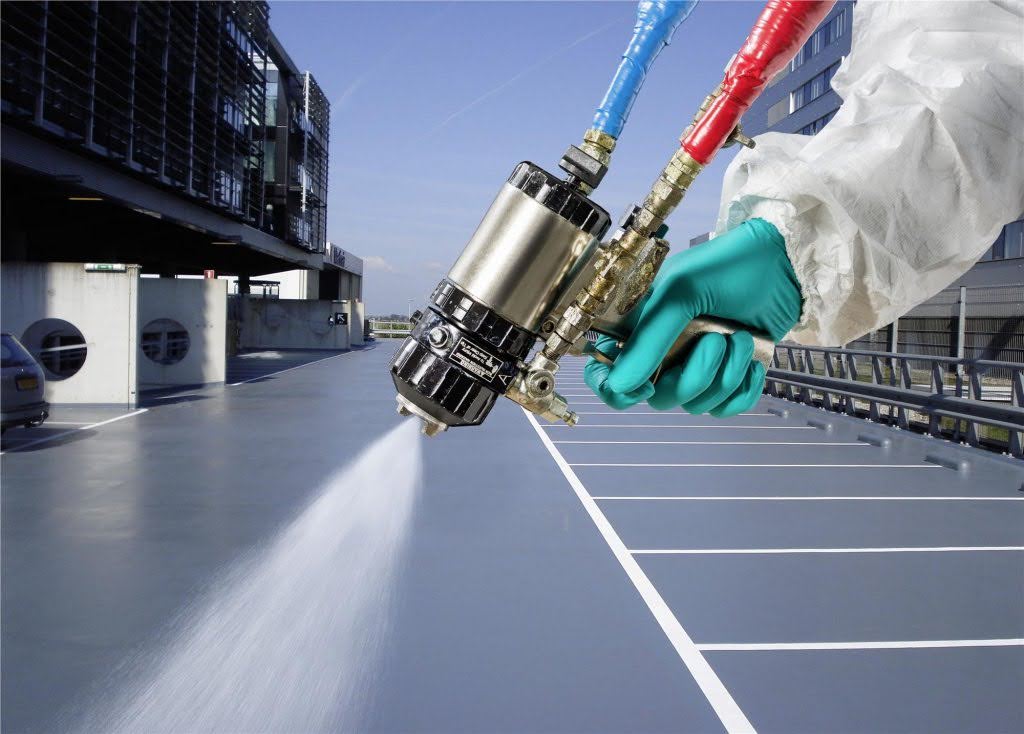
This is why polyurea military coating applications have expanded so rapidly. The material does what no other coating can do at scale: it provides structural reinforcement, waterproofing, and blast resistance in a single spray-applied layer that cures in seconds.
The 2026 Defense Boom: Why Demand Is Surging Now
Global defense spending is at levels not seen since the Cold War. In 2025 and 2026, governments across Europe, the Middle East, and the Indo-Pacific region have dramatically increased investment in force protection, hardened infrastructure, and base survivability. Polyurea protective coating for defense applications sits squarely in the center of that spending wave.
The reasons go beyond simple budget increases. Modern threats — IEDs, drone-delivered munitions, and asymmetric attacks on fixed infrastructure — have changed the calculus of base hardening. Traditional methods like sandbags, concrete barriers, and blast walls are slow to deploy, expensive to maintain, and often insufficient against contemporary blast profiles. Polyurea blast mitigation coating can be applied directly to existing structures in hours, without demolition or reconstruction.
According to a March 2026 report from Asia Pacific Defence Reporter, DELTA Coatings International demonstrated in controlled testing that polyurea-coated concrete panels absorbed significantly higher blast loads before structural failure. The research team measured a 70 percent reduction in blast-induced damage — a figure that has since been cited in multiple government procurement discussions.
How Polyurea Compares to Traditional Blast Protection Methods
To understand why polyurea has become the dominant solution in this space, you need to compare it directly against the alternatives. Sandbags and HESCO barriers are effective but cumbersome — they require significant logistics to deploy, degrade over time in wet environments, and provide no protection to interior structural surfaces. They address the exterior threat but do nothing to prevent spallation — the dangerous secondary fragmentation that kills people inside protected structures.
Fiber-reinforced polymer (FRP) wrapping can strengthen concrete columns and walls but requires extensive surface preparation and skilled installation. It is typically used in post-event structural retrofits, not rapid deployment scenarios. Steel plate reinforcement adds mass and rigidity — the opposite of what blast mitigation requires. Rigid materials transmit shock energy rather than absorbing it.
Polyurea military coating solves the core problem. It is lightweight, flexible, and energy-absorbing. According to published research in Sage Journals, polyurea face sheets in composite panels increased ballistic limit velocity by 37.7% — meaning projectiles need significantly more energy to penetrate a polyurea-treated surface. This translates directly to improved survivability for personnel inside protected structures.
Applications: Where Polyurea Protective Coating Defense Is Being Deployed
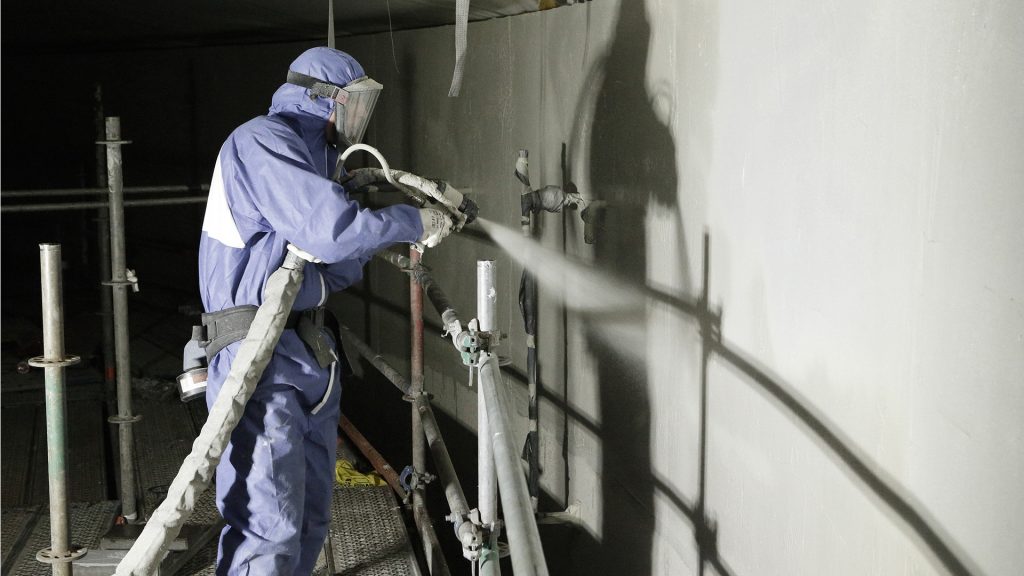
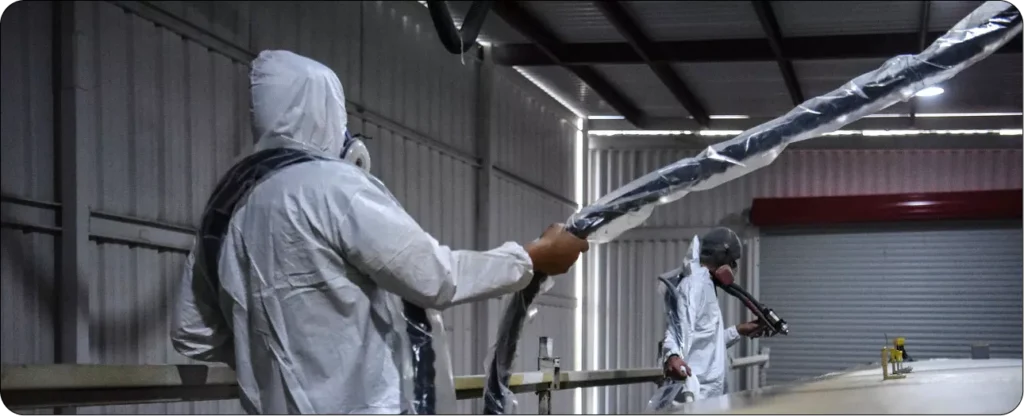
The applications for polyurea blast mitigation coating span a remarkable range of environments. Polyurea is being sprayed on the interior walls and ceilings of hardened shelters at forward operating bases across conflict zones, where it bonds to concrete block and masonry to create a flexible skin that prevents spallation. Light tactical vehicles — including MRAPs, patrol trucks, and support vehicles — are increasingly receiving polyurea coatings on interior cab surfaces. Several manufacturers now offer polyurea-lined vehicle configurations as standard rather than optional upgrades.
Critical infrastructure such as power plants, data centers, and communications hubs are receiving polyurea protective coating for defense-critical applications. Battery energy storage systems (BESS), transformer enclosures, and server room walls are now routinely coated in polyurea as part of resilience planning. Following high-profile attacks on diplomatic facilities in recent years, governments have accelerated programs to harden embassy buildings using polyurea — which can be applied to existing structures without disrupting ongoing operations.
The Science Behind Why Polyurea Works
Polyurea is formed through the rapid reaction of an isocyanate component and an amine-terminated resin blend. This reaction is nearly instantaneous — spray-applied polyurea begins crosslinking in two to five seconds and achieves handling strength within 30 seconds. The resulting polymer is a segmented block copolymer with hard segments (urea linkages) and soft segments (polyether or polyester chains). This segmented structure is the source of polyurea’s extraordinary mechanical properties.
When blast energy hits a polyurea surface, the soft segments deform to absorb and redistribute kinetic energy, while the hard segments maintain structural integrity. This is fundamentally different from how rigid materials like epoxy, concrete, or steel behave under blast loading. Research published via ScienceDirect in 2026 has advanced understanding of bioinspired laminate designs that incorporate polyurea layers between concrete and steel, mimicking natural armor systems like nacre. These composite systems show substantially higher blast resistance than any single-material approach.
Market Growth: The Numbers Behind the Defense Surge
The commercial data supports what practitioners in the field have been observing. The global truck bedliners market — one of the largest civilian polyurea applications — is projected to grow from $4.39 billion in 2026 to $6.98 billion by 2034. But the defense and infrastructure protection segments are growing faster. Self-healing microcapsule coating technologies, which often incorporate polyurea chemistry, are projected to expand from $117.6 million in 2026 to $416.9 million by 2036 — a CAGR of 13.5%.
ArmorThane’s announcement of 12+ blast mitigation contracts across 8 countries in a single quarter is not an anomaly. It is a leading indicator of where the entire polyurea industry is heading. Vendors who position themselves as providers of polyurea military coating and polyurea protective coating for defense applications today will be best positioned to capture the next wave of procurement spending. For further industry data, the Coatings World publication tracks quarterly market developments across all protective coating segments.
Choosing the Right Polyurea Blast Mitigation Coating System
Not all polyurea systems are equal — and in blast mitigation, the difference between a properly formulated system and a commodity coating could be the difference between structural survival and catastrophic failure. Elongation at break is the single most important mechanical property for blast mitigation; a minimum of 300% is required, with elite formulations achieving 400% to 600%. Tensile strength for blast and ballistic applications should be 3,000 PSI or greater at baseline, with premium military-grade formulations reaching 4,500 to 6,000 PSI.
Adhesion to substrate is critical — a polyurea coating that debonds from the wall during a blast event provides no protection. Proper surface preparation, including blast-cleaning, priming, and moisture control, is essential. For defense procurement, require systems that have been tested to UFC 4-010-01 (DoD Anti-Terrorism standards), GSA blast testing protocols, or NATO STANAG standards. Published blast test data — not marketing claims — should be available from any serious supplier.
The Future of Polyurea in Defense and Infrastructure Protection
The 2026 surge in polyurea blast mitigation coating adoption is not a temporary spike. Multiple structural factors are driving sustained growth: increasing global defense budgets, new building codes for infrastructure protection, and a threat environment that continues to grow in complexity. New hybrid formulations incorporating graphene nanoparticles, aramid fiber reinforcement, and intumescent chemistry are being developed to address specific threat profiles. Self-healing polyurea systems — where microcapsules of repair chemistry are embedded in the coating matrix — are moving from laboratory to commercial production.
For military planners, the question is no longer whether polyurea protective coating for defense applications works. The peer-reviewed science is settled. The operational deployments have been validated. The question now is which facilities should be prioritized, which suppliers should be qualified, and how rapidly coating programs can be scaled. For the polyurea industry, the opportunity is unprecedented. The same material that has been protecting truck beds and parking decks for decades is now recognized as a critical national security asset.